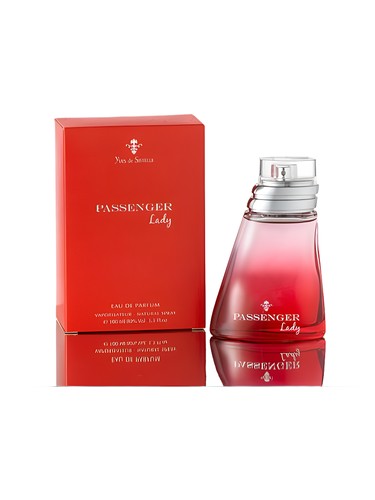
Passenger Lady
Fragrance notes
Passenger Lady opens with aldehydes and citruses that feel bright and slightly sparkling, giving the fragrance a crisp, airy introduction. The aldehydes add a clean, almost soapy edge to the citrus, which keeps the opening from feeling too sweet or heavy. It moves quickly into the heart, where jasmine and rose take over. The white floral and rose accords here are soft and not overly indolic, sitting close to the skin rather than projecting sharply. The jasmine adds a fresh, slightly green petal note, while the rose is mild and powdery, leaning more towards a dried flower than a fresh-cut stem. It feels traditional in a quiet way, evoking older floral compositions without smelling dated. The transitions are smooth, with the freshness of the top notes lingering just long enough to blend into the floral heart before the base begins to show.
The base is where Passenger Lady spends most of its time, and it is notably warmer and more grounded than the opening suggests. Vetiver and sandalwood come in first, adding an earthy, woody depth that prevents the fragrance from staying in the light, fresh territory of the top and heart. The vetiver has a dry, slightly grassy quality that pairs well with the creamy, smooth sandalwood, which softens the sharper edges of the aldehydes. Vanilla rounds out the base, bringing a sweet, cozy warmth that ties the woody notes together. It is not a sugary vanilla, but rather a soft, powdery one that aligns with the overall mild, approachable character of the fragrance. The combination of woody, earthy, and vanilla accords creates a drydown that feels balanced and cohesive, with no single note overpowering the others. The sandalwood and vanilla together give it a gentle, slightly milky finish that lingers on the skin, while the vetiver keeps it from becoming too sweet or cloying. It is a subtle, unassuming base that feels well-suited to everyday wear, offering a nice contrast to the brighter opening without being too bold or overwhelming.
This is a fragrance that works best for people who like soft, traditional florals with a woody, powdery finish. It suits someone who prefers a mild, approachable scent over something loud or attention-grabbing, and it feels appropriate for casual, everyday settings rather than formal occasions. The powdery and aromatic accords make it feel a bit understated, which may appeal to those who want a fragrance that stays close and does not demand notice. It might not be the best choice for anyone looking for a bold, long-lasting, or highly projecting scent, since it tends to stay relatively close to the skin and has a gentle presence. The vanilla and rose notes give it a slightly feminine, classic feel, but the woody and earthy base notes add enough depth to keep it from feeling too frilly or overly floral. It is a good option for spring and summer days, when its fresh, citrusy opening and light floral heart feel appropriate, but the woody base also makes it work on cooler fall evenings. The aldehydes give it a clean, crisp quality that pairs well with daytime activities, whether that is running errands, going to work, or meeting friends for a casual lunch. It does not have any sharp or overpowering notes, so it is unlikely to be offensive to most people, but it also does not have a lot of standout, unique character that would make it memorable. For someone who wants a reliable, easy-to-wear floral with a warm, woody drydown, Passenger Lady fits the bill, even if it does not offer a lot of surprises or distinctive twists. The balance of fresh, floral, and woody notes makes it a solid, if unremarkable, choice for everyday wear, and it feels like a safe, inoffensive option for people who want a classic-smelling fragrance without a lot of complexity or boldness.
Smells similar
Built from the same materials — ranked by how unusual the shared notes are, not by how many.