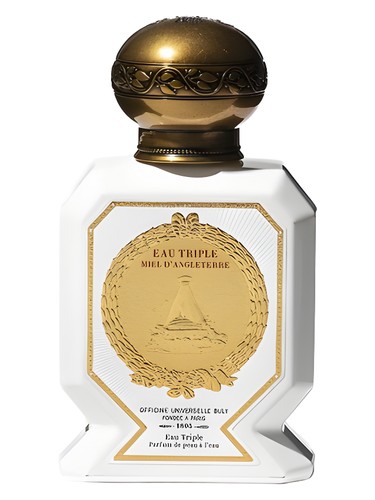
Eau Triple Miel d'Angleterre
Fragrance notes
Character
Eau Triple Miel d'Angleterre presents a dense blend of mahogany, beeswax, honey, and cedar. The honey and beeswax accords give the scent a thick, golden sweetness that feels textured rather than sugary. Mahogany and cedar add a dry, woody backbone that prevents the sweetness from becoming overwhelming. There is an animalic edge running through the composition, lending a slightly raw quality to the wax and honey notes. The aromatic facet keeps the profile from feeling completely heavy, though this remains a rich and substantial fragrance.
The scent stays near the body and does not push outward into the air. The beeswax and honey cling to the skin, creating a personal layer of warmth that others notice only when they are close. The woods support this intimacy by grounding the sweeter elements without expanding the reach. This proximity makes the fragrance feel appropriate for bright, sunlit settings where a loud statement would feel out of place. It suits a calm morning or a quiet afternoon where the wearer wants a personal comfort rather than a grand entrance.
The synthetic facets of the honey note can sometimes feel sharp against the natural grain of the cedar and mahogany. This artificial edge interrupts the otherwise smooth transition between the wax and the wood. The scent also lacks a fresh or citrus counterpart to lift the heavier materials, leaving the profile firmly anchored in its deep, resinous character. For those who prefer a bright opening or a clean finish, the consistent density here may feel monotonous over time. The formula does not shift or reveal new sides as it wears.
Smells similar
Built from the same materials — ranked by how unusual the shared notes are, not by how many.