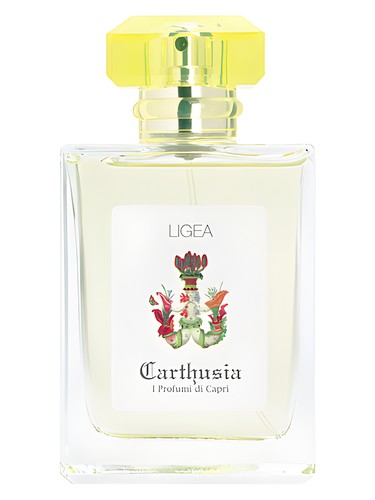
Ligea (Ligea la Sirena)
Fragrance notes
Character
Ligea la Sirena opens with a blast of citrus that feels less like breakfast juice and more like the peel of a bergamot being twisted over a smoldering censer. That first breath is all lavender and bright lemon, but the incense sits underneath it, dry and slightly ecclesiastical, before the orange and mandarin bubble up with an almost carbonated fizz. The heart is where this fragrance shows its hand: lemongrass and cloves together smell oddly like a sun-baked spice market, with geranium adding a green, slightly bitter edge that keeps the patchouli from veering into hippie territory. On my skin, the cloves never scream — they blur into the warm, balsamic base of vanilla, styrax, and tobacco blossom, all softened by white musk. This is no gourmand; the tobacco is dry and leafy, the vanilla more of a textured sweetness than a frosting.
The overall image is a mermaid on a Mediterranean cliff at dusk, her wet hair tangled with sea salt and lavender, a trail of incense smoke rising from a fisherman’s hut behind her. It feels natural and thoughtfully blended, niche in its refusal to bow to sweetness or synthetic projection. The longevity and sillage are modest — this is a fragrance that stays close, a companion rather than a declaration. Best worn in the transition of autumn, when the air is cool enough to hold the spice and incense without drowning them. If you crave a skin scent with an unexpected Italian gravitas, Ligea will sit beautifully on a crisp white shirt or a cashmere sweater. Skip it if you need eight hours of roar — this siren prefers an intimate audience.
Smells similar
Built from the same materials — ranked by how unusual the shared notes are, not by how many.