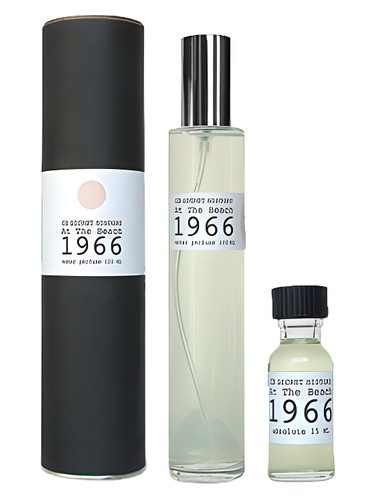
At The Beach 1966
Fragrance notes
Character
At The Beach 1966 opens with a startling slap of brine and crushed seashells, almost sterile in its minerality. There is no coconut, no suntan lotion, no warm vanilla musk. This is the cold Atlantic of a childhood August, where the water leaves a gritty film on your ankles and the wind carries the sour breath of low tide. The sea water note is sharp, metallic, and unapologetically saline. It does not progress toward sweetness; instead, it slowly reveals a backbone of dry wood and sand that has been baked by the sun. That animalic, almost funky undertone emerges from the shells themselves, a reminder that these are not pristine souvenirs but the litter of living creatures.
If this fragrance were a single image, it would be the moment you lift a flat gray stone on a lonely stretch of shoreline and find a colony of tiny, frantic crabs scuttling for darkness. It is natural through and through, precisely because it feels synthetic in its refusal to comfort. The nose behind it, Christopher Brosius, understands that realism is often unpleasant. The performance matches that honesty: longevity hovers around three hours, sillage close to the skin. You wear this for yourself, not for the room.
This is for the person who finds the beach a place of raw solitude rather than leisure. Skip it if you want to smell like a piña colada or a resort candle. Wear it on a grey afternoon in July, or during a rainstorm that smells of wet stone and distant tide pools. It will not last the evening, but that feels appropriate. Why should a visit to the beach linger longer than the salt crust on your skin? 🏖️
Smells similar
Built from the same materials — ranked by how unusual the shared notes are, not by how many.