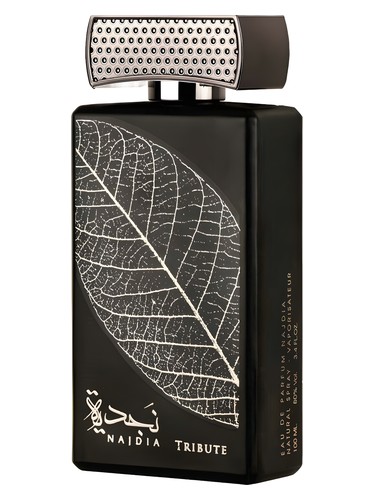
Najdia Tribute
Fragrance notes
Character
Najdia Tribute opens with a surprisingly crisp snap of apple and ginger, like biting into a green fruit while a cold mandarin peel sprays your wrist. The bergamot keeps things bright, but almost immediately the violet leaf and saffron step in to darken the edges, pulling the composition toward a smoky, leathery heart that feels less like a woodland and more like a damp, ozonic cave where someone left a suede jacket to dry beside a patch of ambergris. The dry down is where Lattafa’s blend of leather, oud, and sandalwood settles into a quiet animalic warmth, not loud or aggressive but persistent enough to stick around for five or six hours before fading to a skin scent. The sillage is polite, never demanding the room’s attention, which makes sense given the middling numbers; this isn’t a beast, it’s a companion piece for cool evenings.
The character here is a strange, appealing hybrid: a leather fragrance that remembers to breathe. The aquatic and ozonic accords keep the heavy base from suffocating, so you get the richness of oud and saffron without the usual claustrophobia. It feels slightly synthetic in its freshness, but that’s part of its charm — a modern, affordable take on woody-leather that nods to niche ambition without the price tag. Who should wear it? Anyone who wants a fall or winter night scent that isn’t a gourmand or a pure resin bomb, especially if you like suede and violet leaf. Skip it if you demand nuclear projection or if animalic notes make you queasy; the ambergris here has a salty, almost sweaty undertone that won’t suit every nose.
Best worn after sunset, when the air has a chill, and the ginger and saffron can unspool slowly over a leathery base. Fall and winter are its home, but a crisp spring evening will let its peculiar green-ozonic side shine, too. Just don’t reach for it in July — the aquatic touch might read as stale body spray rather than intentional freshness.
Smells similar
Built from the same materials — ranked by how unusual the shared notes are, not by how many.