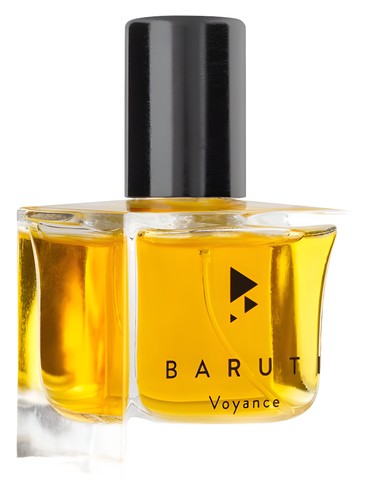
Voyance
Fragrance notes
Character
Tuberose often arrives on the scene like a diva demanding a spotlight, but in Voyance by Baruti, the white floral enters through a side door, already arm in arm with sandalwood’s creamy warmth. This isn’t a shouty, tropical tuberose. It’s filtered through a woody, almost dusty lens, where guaiac wood and vetiver add an earthy roughness that keeps things from tipping into soapy territory. The opening is a quiet, aromatic flutter, and over the next hour the florals soften into a powdery musk, like the interior of an old vanity drawer lined with faded velvet.
There’s a deliberate tension here: the tuberose tries to bloom, but the dry woods hold it back, and the result feels like a single white flower pressed inside a heavy book. That’s the image that sticks – not a bouquet, but a flattened, preserved memory of fragrance. The performance matches the introversion. Sillage sits at a modest 3.32, so you’re not announcing yourself from across the room, and longevity is a decent 3.93, enough for a working day but not an all-nighter. Spring and fall are its natural habitats, and it leans decidedly daywear, though the powdery drydown could work for a quiet evening.
This is a niche scent that never tries to be loud. It feels natural, slightly melancholic, and a little dusty in the best way. Who should wear it? Anyone who likes their florals tempered with earth, who finds comfort in restraint rather than projection. Who should skip it? Those craving a tuberose bomb or a sweet, glowing gourmand. Voyance whispers when you might want it to speak, but that’s exactly its point – not every fragrance needs to shout to be felt.
Smells similar
Built from the same materials — ranked by how unusual the shared notes are, not by how many.