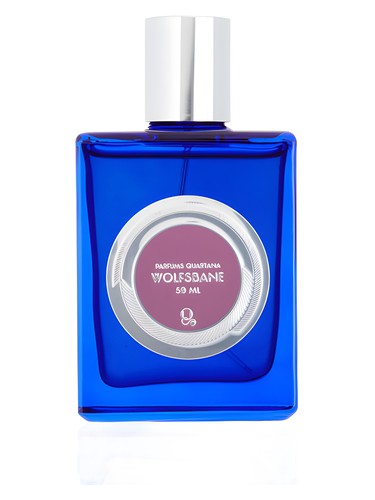
Wolfsbane
Fragrance notes
Character
Wolfsbane opens like a wound in the earth: truffle and absinthe, green and fungal, with a bitter, metallic bite. The tuberose that follows is not the dewy white flower of a bridal bouquet, but something bruised, clenched, almost feral, wrapped in fig leaf’s vegetal snap and a cumin that pushes the skin into sweat-slick territory. Castoreum and prunol drag it into animalic territory, a leather-and-almond musk that feels less like perfume and more like the scent of a creature’s den after the occupant has stirred. The drydown softens into benzoin and tobacco blossom, but there is always a thread of ginger and vetiver underneath, like a low growl that never quite stops.
This is a fragrance that wears you, not the other way around. It sits close to the skin, sillage hovering just above a whisper, which is a blessing and a curse. The longevity is solid at nearly four hours, but you will reapply if you want anyone else to smell it. It feels natural in its rawness, not synthetic, but the prunol can turn slightly candied if the weather gets warm, so stick to autumn and winter when the air bites back. Who should wear this? Someone who wants to smell like a forest at midnight, wet leaves and fur and something rotting just out of sight. Who should skip it? Anyone who thinks cumin belongs only in a kitchen, or who wants to be liked in a crowded elevator. This is a private scent, worn on the back of the neck, for nights when you are not asking for anyone’s approval.
Smells similar
Built from the same materials — ranked by how unusual the shared notes are, not by how many.