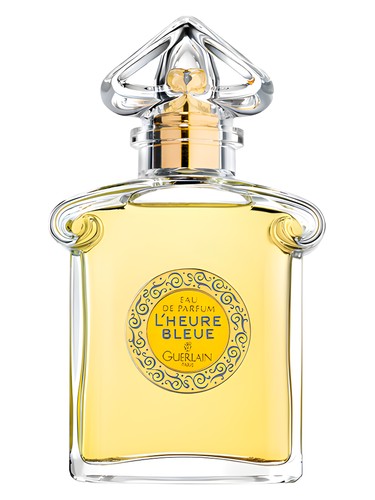
L'Heure Bleue Eau de Parfum
Fragrance notes
Character
Anise and neroli open L'Heure Bleue on a cold, faintly liquorice-like note that has read as unusual since 1912 and still does now, before heliotrope, carnation and violet crowd into a genuinely dense floral heart.
Jacques Guerlain packed in cloves, ylang-ylang, rose, jasmine, orchid and tuberose alongside them, and the base of iris, vanilla, benzoin, sandalwood, tonka bean, musk and vetiver turns the whole thing powdery and warm by the end. Few openings from that era read as strange today as this one still does.
The iris-and-vanilla base is durable and unhurried, and sillage is contained but present, a soft cloud that lingers within a small radius of the wearer rather than reaching further out. Fall and winter suit it best by a clear margin, and night dominates over day heavily; this reads as evening wear for cold months, worn somewhere quiet.
The anise at the opening is the strangest, most memorable part of the whole composition, bittersweet against all that carnation and powder, and it keeps surfacing faintly even once the vanilla and benzoin have settled in. Cloves add a small, dark spike of heat somewhere in the middle of all that flower and powder, easy to miss on a first wearing. Old, strange, and entirely sure of its own shape.
Smells similar
Built from the same materials — ranked by how unusual the shared notes are, not by how many.