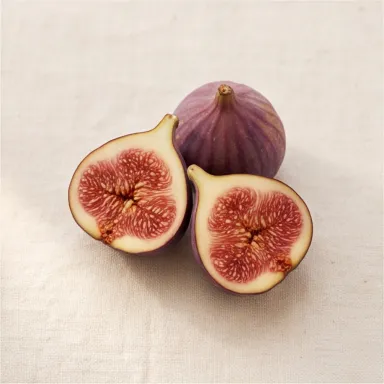
Fig
Creamy green leaves, milky sap, and softly sweet ripe fruit.
You may know it from A freshly picked fig leaf or ripe fig
Where it comes from
Built from aroma materials to suggest fig fruit, leaves and milky sap.
Botanical name: Ficus carica
Worth knowing
Fig scent usually comes from a reconstruction, not distilled fig fruit.
About fig
The fruit is the part of the fig that perfume mostly leaves alone. Ficus carica is a tree with milky sap made by laticifer cells, and its fruit is a hollow fleshy structure lined with flowers. Perfumers rebuild the tree instead, from leaf, sap and wood, and the ripe fruit shows up only as a hint of ripeness. One source says a perfumer can focus on the fruit itself, though they rarely do.
Write-ups of the accord split it into facets. The sharp, green, slightly bitter side of crushed leaf is credited mainly to stemone, which Givaudan describes as green, natural, leafy and fresh and as lending a natural nuance to fig leaves among other notes. Sources differ on who made stemone and in which year. The milky, coconut-like side is put down to gamma-lactones, but they disagree on which: one names gamma-octalactone, another gamma-decalactone and gamma-nonalactone. Osmetheca describes a fig note as opening sharp, green and almost herbal with a latex-milk edge, then moving into a creamy phase touched with coconut.
Fig leaf absolute (CAS 68916-52-9) is made by extracting the leaves with petroleum ether to get a concrete, then washing that with alcohol. Its odour is listed as honey, green, herbal, tobacco and coumarinic. Whether anyone still makes it is another point where sources differ: one says no natural fig material is available commercially, another says it is still produced. Its IFRA status is disputed too. The Good Scents Company, quoting IFRA, lists it as prohibited as a fragrance ingredient because of dermal sensitisation and phototoxicity, while Osmetheca says the 2025 standards carry no significant restriction on it.
The phototoxicity concern has a plain source. Psoralen and bergapten are found in the milky sap of the leaves and shoots, but not in the fruit. A clinical case report describes fig sap burns after UV exposure, with blistering often within 24 hours.
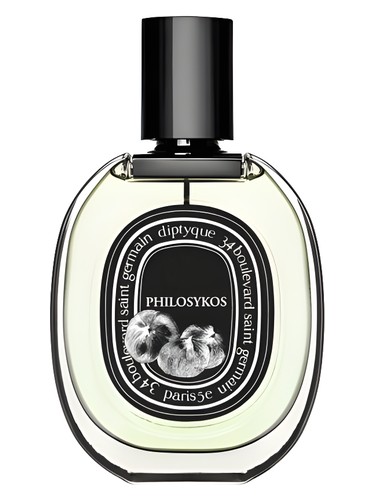
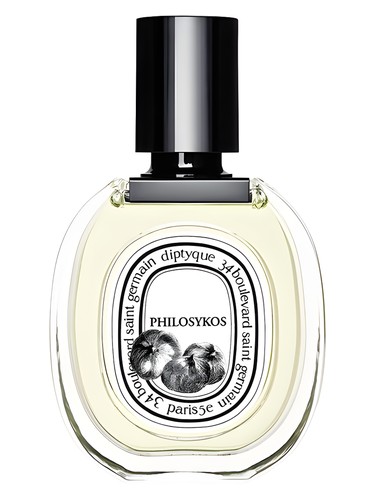
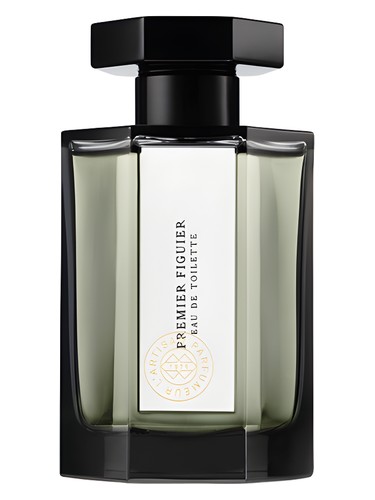
The note became a niche staple in the 1990s through Olivia Giacobetti. Premier Figuier for L'Artisan Parfumeur came in 1994, and Osmetheca calls it the first niche perfume built around the whole fig tree. Diptyque's Philosykos followed in 1996, and one reviewer finds its greens sharper and more realistic than those of Premier Figuier.
Accords it shows up in
How many of the fragrances listing Fig in our catalogue also carry each accord. We counted this ourselves.
Often paired with
The notes that appear next to Fig most often in our catalogue.











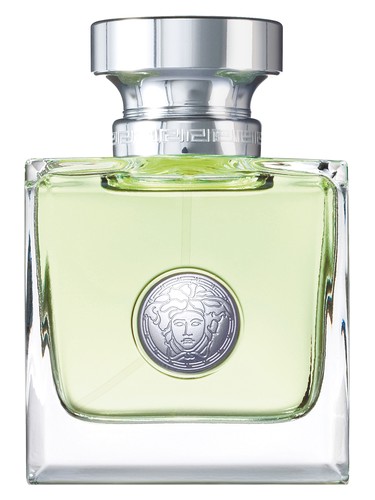
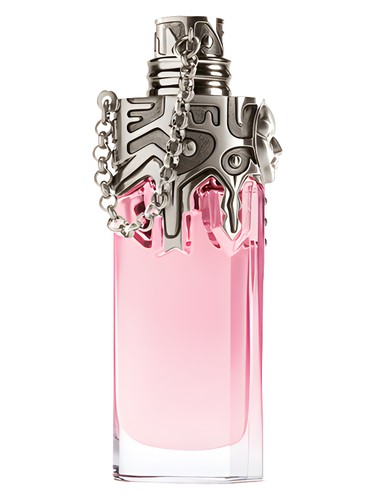
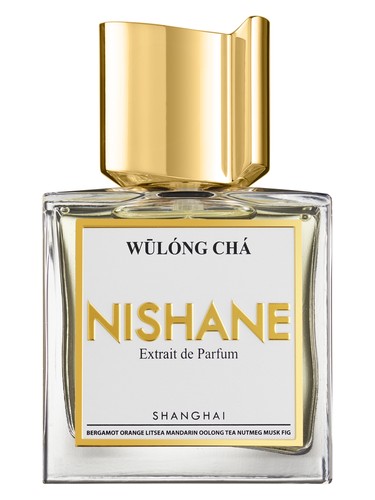
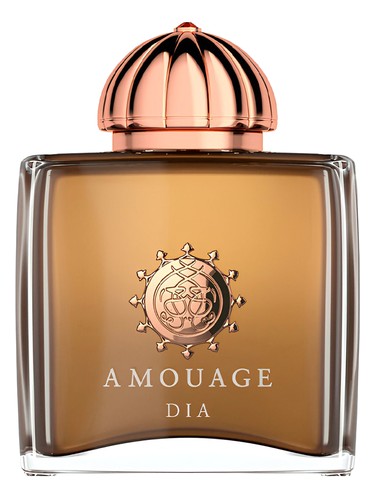
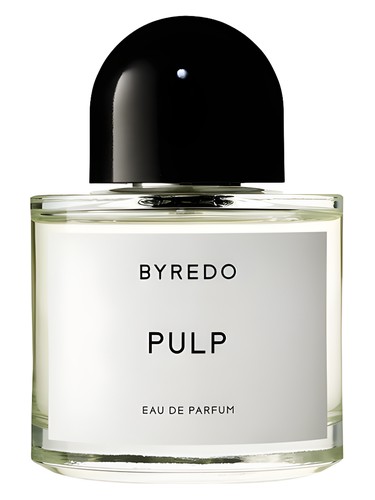
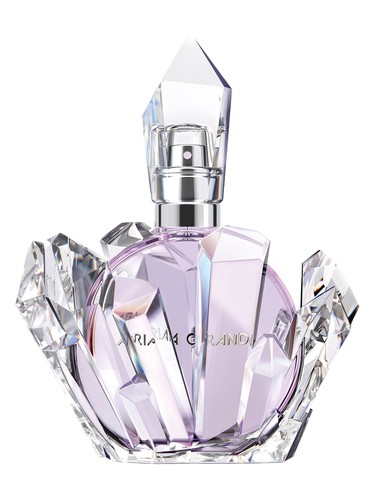
Well-known fragrances with Fig
Fragrances that list it in their notes, most-rated first.
Houses that use it most
Ranked by how many of their well-known fragrances list Fig.